
1. The Neuron: The Brain's Basic Unit
The nervous system is built from roughly 86 billion neurons, specialized cells that send and receive electrical and chemical signals. Each neuron consists of specialized functional compartments designed to collect, process, and transmit data across biological networks.
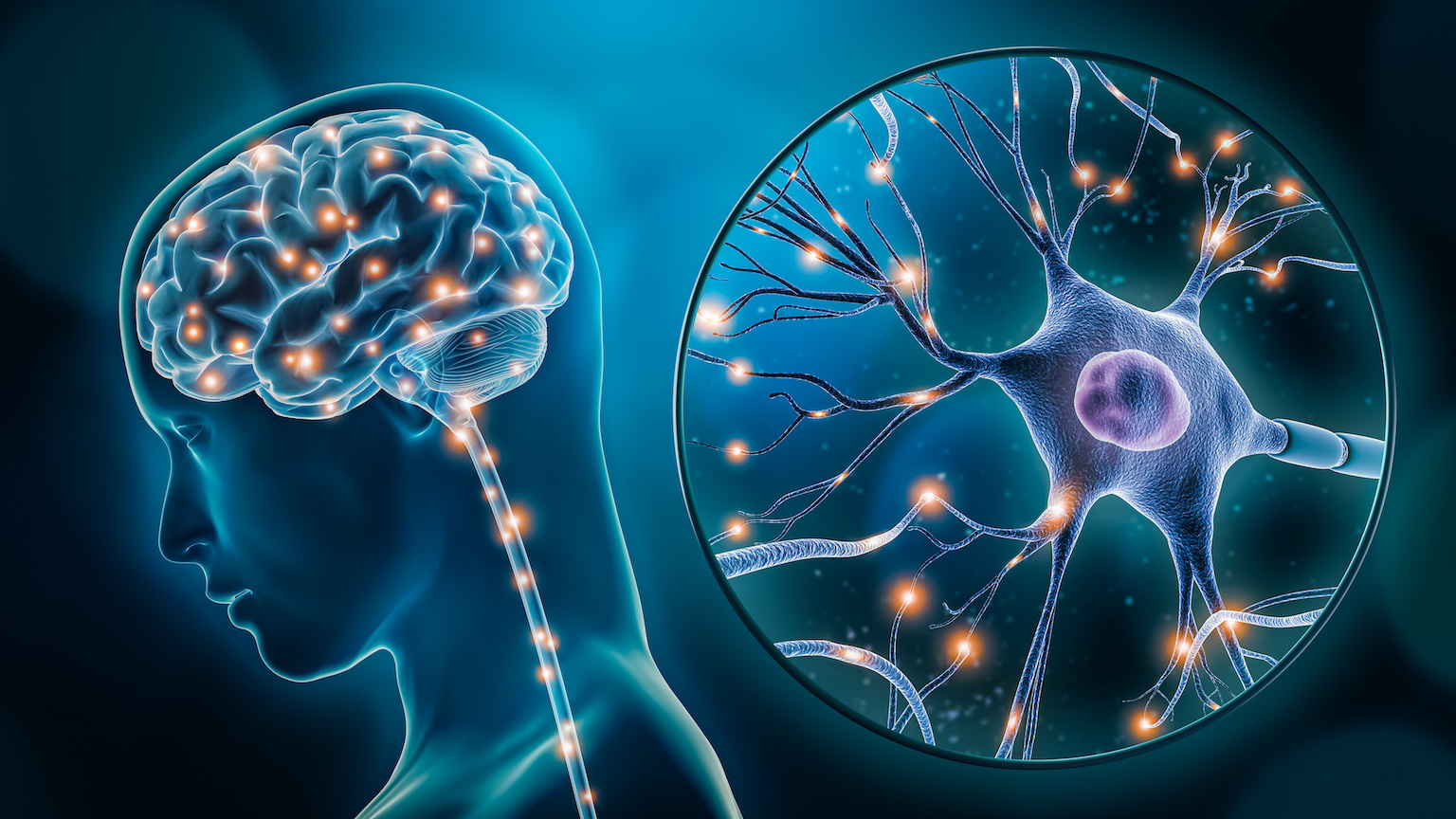
Figure 1. Anatomy of a myelinated motor neuron.
Dendrites
Branch-like extensions designed to receive incoming chemical and electrical signals from connected neighboring neurons.
Soma (Cell Body)
Houses the cellular nucleus and integrates incoming inputs. If cumulative excitation crosses threshold, it fires.
Axon & Myelin
A long fiber carrying electrical impulses away from the soma, insulated by fatty myelin sheath for saltatory conduction speed.
Axon Terminals
The distal endpoints that convert electrical action potentials into chemical neurotransmitters to stimulate downstream cells.
2. How a Signal Travels: The Action Potential
Neurons communicate using brief electrical impulses called action potentials. At rest, a neuron maintains a
negative internal voltage of roughly -70 millivolts
relative to the exterior.
Trigger Threshold
Summed dendritic inputs push internal voltage past threshold (~ -55mV).
Depolarization
Voltage-gated sodium channels open; positive ions rush in, spiking voltage positive.
Repolarization
Potassium channels open, driving positive ions out to restore resting negativity.
Refractory Period
A brief reset lockout preventing backward propagation and ensuring unidirectional travel.
3. Synaptic Transmission: Chemical Communication
Neurons remain physically separated by a microscopic gap known as the synaptic cleft. When an action potential arrives at the axon terminal, it triggers vesicular release of chemical neurotransmitters.
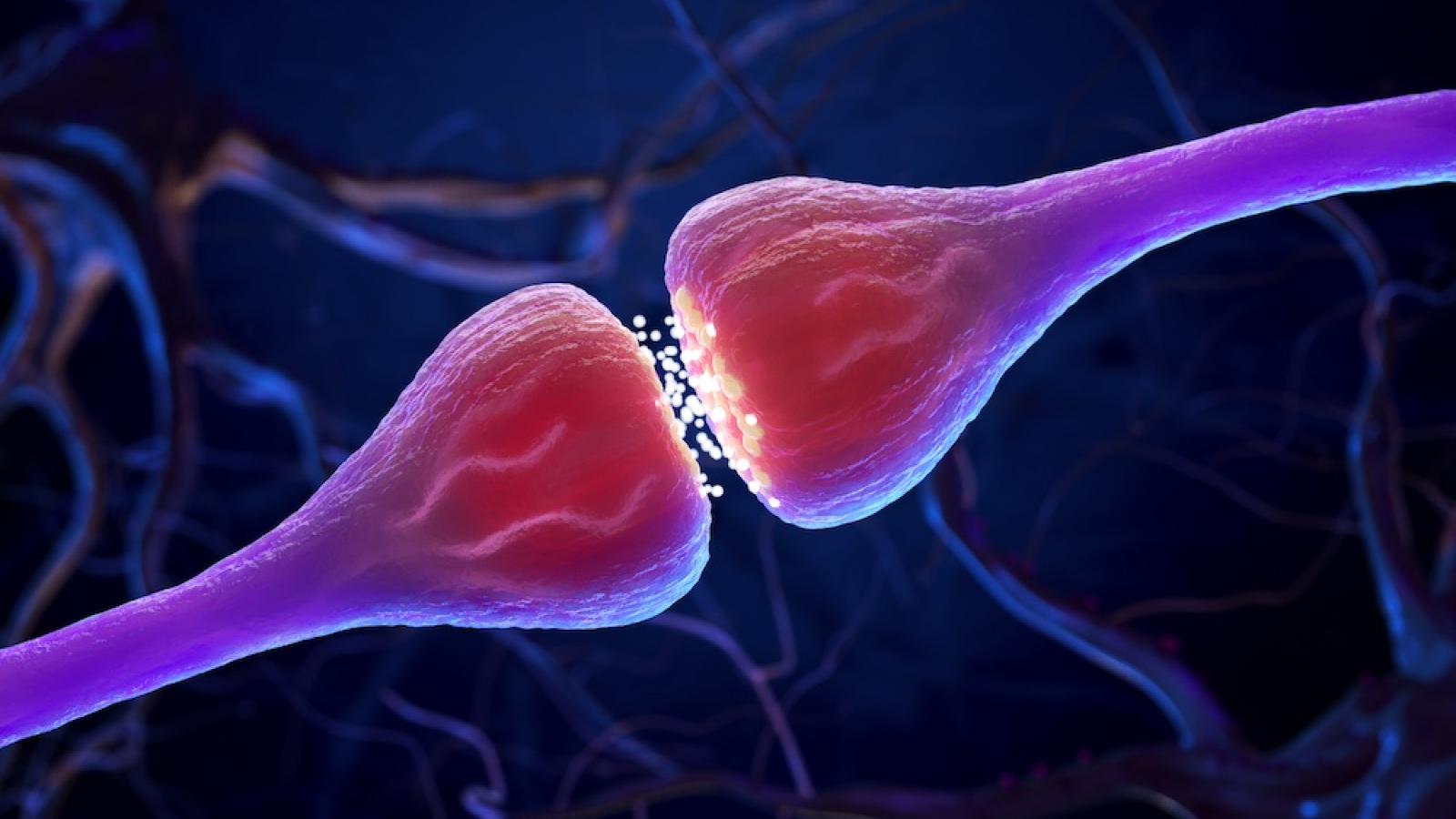
Figure 2. Chemical transmission across the synaptic cleft.
Dopamine
Reward prediction, motor control, motivation, reinforcement.
Serotonin
Mood modulation, appetite, sleep, and emotional regulation.
Glutamate
Primary excitatory neurotransmitter; critical for synaptic plasticity.
GABA
Main inhibitory neurotransmitter suppressing neural hyperexcitation.
4. Neuroplasticity: How the Brain Changes
The brain is structurally dynamic. Synaptic connections continuously strengthen or weaken based on activity levels—serving as the fundamental biological substrate of learning and memory formation.
Long-Term Potentiation
Repeated synchronous activation increases synaptic efficacy and receptor sensitivity, forming stable memory traces.
Synaptic Pruning
Unused pathways are systematically eliminated during developmental refinement to optimize neural efficiency.
Neurogenesis
Adult neural stem cells generate new functional neurons in specialized niches like the hippocampal dentate gyrus.
5. Major Brain Regions and Their Roles
| Brain Region | Primary Cognitive & Physiological Role |
|---|---|
| Cerebral Cortex | Higher-order cognition, sensory integration, conscious perception, and voluntary motor output. |
| Prefrontal Cortex | Executive function, abstract planning, decision-making, working memory, and impulse control. |
| Hippocampus | Encoding and consolidation of declarative episodic memories into long-term cortical storage. |
| Amygdala | Rapid emotional appraisal, salient threat detection, and emotional memory modulation. |
| Cerebellum | Motor coordination, balance, procedural skill refinement, and timing precision. |
| Brainstem | Autonomic homeostatic regulation (respiration, cardiac rhythm, sleep-wake cycles). |
6. Biological Neurons vs. Artificial Neural Networks
While artificial intelligence borrows terminology directly from neuroscience, the underlying mechanisms differ fundamentally in scale, signal representation, and learning rules.
| Comparison Aspect | Biological Neuron | Artificial Neuron (AI) |
|---|---|---|
| Signal Format | Discrete electrochemical spike trains (ions & voltages) | Continuous real-valued numerical scalars |
| Integration | Nonlinear dendritic summation over time and space | Weighted linear dot-product sum + bias |
| Learning Rule | Local synaptic plasticity (Hebbian rules, STDP) | Global gradient descent via backpropagation |
| Energy Consumption | ~20 Watts for the entire human brain (~86B units) | Kilowatts to megawatts for large training clusters |
| Architecture | Sparse, spatial, embedded, metabolic constraints | Dense matrix multiplications with no spatial cost |
7. Neuroscience Deep Dive: Memory, Emotion, Sleep, & Disease
Memory Systems & Systems Consolidation
Memory is distributed across synaptic networks rather than localized in a single vault. Through long-term potentiation (LTP), frequently co-activated synapses undergo structural strengthening.
Emotion Circuits & Stress Regulation
Emotion processing integrates the amygdala (rapid threat appraisal), prefrontal cortex (top-down cognitive reappraisal and executive damping), insula (interoceptive body awareness), and the hypothalamus (HPA axis stress hormone release).
Chronic stress weakens prefrontal inhibitory control over the amygdala, generating feedback loops characteristic of anxiety and depressive states.
Sleep Architecture & Metabolic Clearance
Sleep cycles through 90-minute non-REM and REM stages. Beyond memory replay and transfer from hippocampus to cortex during slow-wave sleep, the glymphatic system activates dramatically during deep sleep, actively flushing metabolic waste products like amyloid-beta from brain tissue.
Neurological & Psychiatric Conditions
- Parkinson's Disease: Progressive degeneration of dopamine-producing neurons in the substantia nigra, disrupting basal ganglia motor balance (Lewy body pathology).
- Depression: Characterized by altered prefrontal-limbic circuit connectivity, HPA axis cortisol dysregulation, and reduced neuroplasticity.